

Citrus trees are one of the most popular plants in backyards for a good reason. Few things beat walking outside and picking a fresh lemon for your G&T or a juicy mandarin for the kids’ lunchboxes. But citrus trees also come with their own unique quirks, and one of the most common questions we get on the job is “what is going wrong with my citrus tree”.
This is part one of a two part series. Here, we’re covering what’s actually going on inside your citrus tree, how to read the warning signs it gives you, and one very Australian pest you’ve probably seen the tell tail signs of without realising the cause.
Most Citrus Trees Are Actually Two Plants Grafted Together
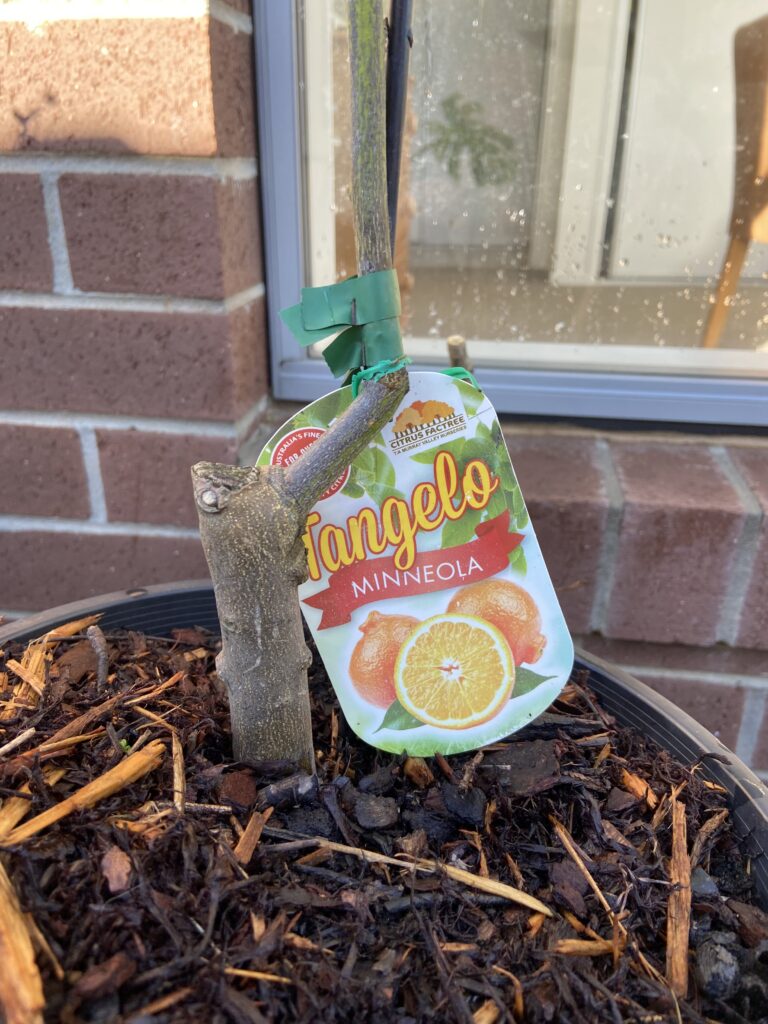
Here’s something a lot of people don’t realise. That lemon, orange or mandarin tree from the nursery isn’t one plant, it’s actually two.
The top part, the part that produces the fruit you want, is called the scion. The bottom part, including the roots and lower trunk, is called the rootstock. Nurseries graft a cutting from a productive citrus variety onto a separate, hardier root system. The rootstock is chosen because it’s tough, disease resistant, and grows well in a wide range of soils, while the scion is chosen because it produces the fruit you actually want to eat.
How to spot the graft: Look at the lower trunk of your citrus tree, usually somewhere between 10 and 30cm from the ground. You’ll see a slight kink, bump or change in bark texture or colour. That’s the graft union. Everything above that point is your desired variety. Everything below it, including the roots, is the rootstock.
Why It Matters: Keeping Your Lemon Tree a Lemon Tree
This is where things get interesting. Because the rootstock is a different plant entirely, it has its own agenda. If a shoot grows from below the graft union, directly from the rootstock, it’s not your lemon tree. It’s the rootstock trying to grow as its own plant.
These shoots are usually called suckers, and they’re often easy to spot once you know what to look for. They tend to be more vigorous than the rest of the tree, often thornier, and the leaves can look noticeably different in shape or size to the rest of the canopy.
Why does the rootstock try to take over? It comes down to vigour. Rootstocks are bred to be tough and grow strongly, which is exactly why they’re used as the foundation. But that same strength means that if a rootstock shoot is left to grow, it has every advantage over the grafted variety above it. Given enough time and energy, it can outcompete and eventually overwhelm the productive part of the tree entirely.
What to do about it: Keep an eye on the base of your tree, particularly below the graft line, and remove any new growth from that area as soon as you spot it. A clean cut close to the trunk with sharp secateurs is all it takes. Left for a season or two, those shoots can get away from you and become a much bigger job.
Reading the Warning Signs: What Your Leaves Are Telling You
Citrus trees are pretty vocal about when something isn’t right, you just need to know how to read the signals. The leaves are usually the first place trouble shows up, and the pattern of yellowing can actually tell you what’s going on.
Yellowing leaves with green veins (older leaves): This points to a magnesium deficiency. It tends to show up on mature leaves first because magnesium moves around within the plant, getting pulled from old growth to support new growth and fruit. Corrected using Epsom salts.
Yellowing leaves with green veins (younger leaves): The same pattern on new growth instead usually indicates an iron deficiency. Unlike magnesium, iron doesn’t move around the plant, so deficiencies always show up on the newest growth first. Corrected using Iron Chelate.
Curling leaves: This one is often more about water than nutrients. Underwatering causes leaf curling and crispy edges, so if you’re seeing curled leaves alongside dry soil, that’s your first clue. That said, some trace element deficiencies like copper can also cause young leaves to curl or become distorted, so if watering seems fine it’s worth considering a trace element top-up too.
Most of these deficiencies are easily corrected with a quality citrus fertiliser containing trace elements, applied according to the seasonal schedule (more on that in part two). And while Seasol won’t replace a proper fertiliser for correcting deficiencies, it’s a great addition to your routine for building overall plant resilience, as we covered in our Seasol blog.
A Very Australian Pest: Citrus Gall Wasp
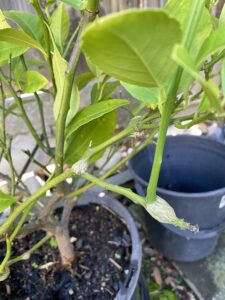
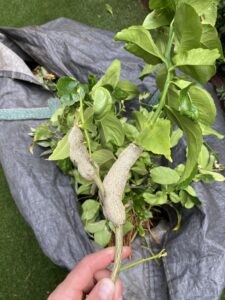
If you’ve ever noticed strange, lumpy swellings on the branches of your citrus tree and wondered what on earth was going on, there’s a good chance you’ve met citrus gall wasp. It’s a genuinely Australian pest that since the 1990s has migrated from Queensland through New South Wales and can now be found as far south as Melbourne, where it’s virtually endemic in the iconic backyard lemon tree.
How to spot it: The galls start to become visible in April and are easy to see by June. They look like swollen, woody lumps along the branches, often covered in tiny pinprick holes where the adult wasps have emerged. An infestation usually won’t kill your tree outright, but repeated attacks reduce fruit size and yield and can cause branch dieback over time.
What to do about it: Inspect your trees in late winter and spring and use clean garden clippers to cut off any affected branches before the wasps emerge. Never put the cut galls in your compost. Bag them up and leave them in the sun for a few weeks before putting them in the bin — this solarising process kills off any wasps still developing inside before they get the chance to spread.
One more tip worth knowing: avoiding high nitrogen fertiliser in spring helps too, since it promotes the soft, sappy growth that’s perfect for egg laying. Feeding your trees in late autumn and early winter instead is a better approach.
Coming Up in Part Two
Now that you know what’s going on inside your citrus tree and what to watch out for, part two is all about keeping it happy and thriving. We’ll cover watering, fertilising, when to use copper sprays, pruning and removing dead wood, and a simple technique called fruit thinning that can make a big difference to the size and quality of your harvest.
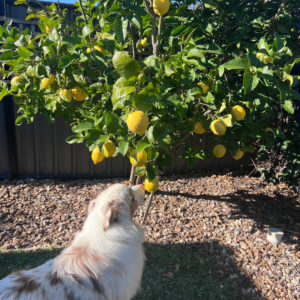
Charlie’s Verdict: Mum and Dad have tried to give me lemons and oranges before. 0/10 for taste, 10/10 as a ball to play with. Bonus points because they chased me around the garden trying to get it back. Woof.