

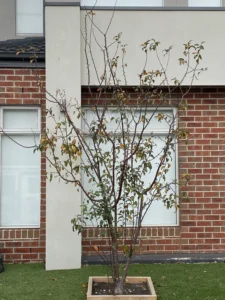
Every autumn and winter we get some version of the same message from customers: “I think my tree is dying, all the leaves are falling off.” And near enough every time, the answer is usually the same – your tree is absolutely fine, it’s just doing exactly what it’s supposed to do.
If you’ve got leaves piling up around your garden right now, here’s everything you need to know.
It’s Probably Deciduous. Here’s What That Means.
Plants basically fall into two camps when it comes to their leaves.
Evergreen plants hold onto their leaves year round. Think most Australian natives, citrus trees, photinias, and many hedging plants. They do still drop old leaves here and there, but they never go completely bare.
Deciduous plants deliberately shed all their leaves in autumn and winter. This isn’t a sign that something is wrong. It’s a survival strategy that’s been refined over millions of years. As days get shorter and temperatures drop, the tree stops producing chlorophyll (the stuff that makes leaves green), cuts off the water supply to its leaves and drops them to conserve energy for the colder months ahead. The tree then goes dormant – a bit like hibernation – resting and preserving its resources until spring triggers new growth.
Common deciduous trees you’ll likely have in a garden include maples, liquid ambers, crepe myrtles and fruit trees like apples, plums and figs. If yours is dropping all its leaves right now, take a breath. It’s just having a nap.
A quick check if you’re still not sure: scratch a small patch of bark on a branch with your fingernail. If there’s green underneath, the tree is alive and well. If it’s brown all the way through on multiple branches, then it might be worth further investigating.
So the Tree Is Dormant. Should I Really Be Pruning It Now?
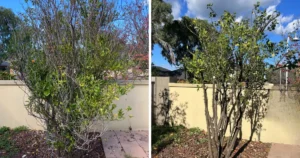
Yes, actually. Winter dormancy is the best window for pruning deciduous trees, and there are a few good reasons for that.
First, with all the leaves gone you can actually see what you’re doing. The branch structure is fully exposed, which makes it much easier to identify what needs to come off — crossing branches, dead wood, anything that looks structurally out of place.
Second, because the tree isn’t actively growing, pruning during dormancy causes far less stress. The cuts heal well, there’s less risk of disease entering through fresh wounds, and the tree can put all its energy into strong new growth when spring arrives.
For fruit trees specifically, this timing is particularly important. Pruning trees such as apple, pear, plum and fig during winter dormancy encourages better fruit production the following season and keeps the tree in good structural shape long term.
If your deciduous tree is on the larger side and you’re not confident about where to cut or how much to take off, have a look at our tree pruning and shaping service to see how we can help. We’re always happy to take a look and give you an honest assessment — no drama, no overselling. Just a good clean prune while the timing is right.
Now, What Do You Do With All Those Leaves?
Don’t bag them up and put them in the green bin. Fallen leaves from deciduous trees are genuinely useful, and it costs you nothing but a bit of time.
- Add them to your compost. Autumn leaves are what’s called a “brown” or carbon-rich material, which is exactly what a healthy compost heap needs to balance out the nitrogen-rich “greens” like food scraps and fresh grass clippings. Layer them in and give the pile a turn every now and then over winter.
- Make leaf mulch. Bag the leaves up, dampen them down, and leave them somewhere out of the way for six to twelve months. The fungi do all the work. What you end up with is a rich, crumbly material that makes excellent mulch for garden beds and around trees, suppressing weeds and slowly improving your soil. It’s essentially free mulch!
- Use them straight onto garden beds or plant pots. If you want a simpler option, rake the leaves and lay them directly over your garden beds and/or plant pots as a protective layer over winter. They’ll break down slowly and improve the soil underneath. Just keep them away from the base of plant stems and trunks to avoid any moisture-related rot.
The Smartest Way to Tackle the Raking
One practical tip that’ll save you a lot of unnecessary effort: wait.
If you have several deciduous trees in your garden, they won’t all drop their leaves at exactly the same time. Rake too early and you’ll find yourself out there the following weekend doing it all over again. Wait until the bulk of the leaf drop is done across all your trees and then do one good rake. You’ll cover the same ground once instead of three times.
Worth the patience, trust us.

Charlie’s Verdict: Autumn leaves. Very interesting development. Mum and Dad keep telling everyone not to panic about them, and honestly I agree. Mostly because they’re the same colour as me. I blend in. I become one with the garden. It’s called being a pawfessional. 10/10 best season. Woof.